Encode everything
A classification code is not a technical identity
A procurement class can say “valve” and still leave every pressure, material, connection, and approval unanswered. This reference problem restores the boundary between a category and the part that must work on the line.
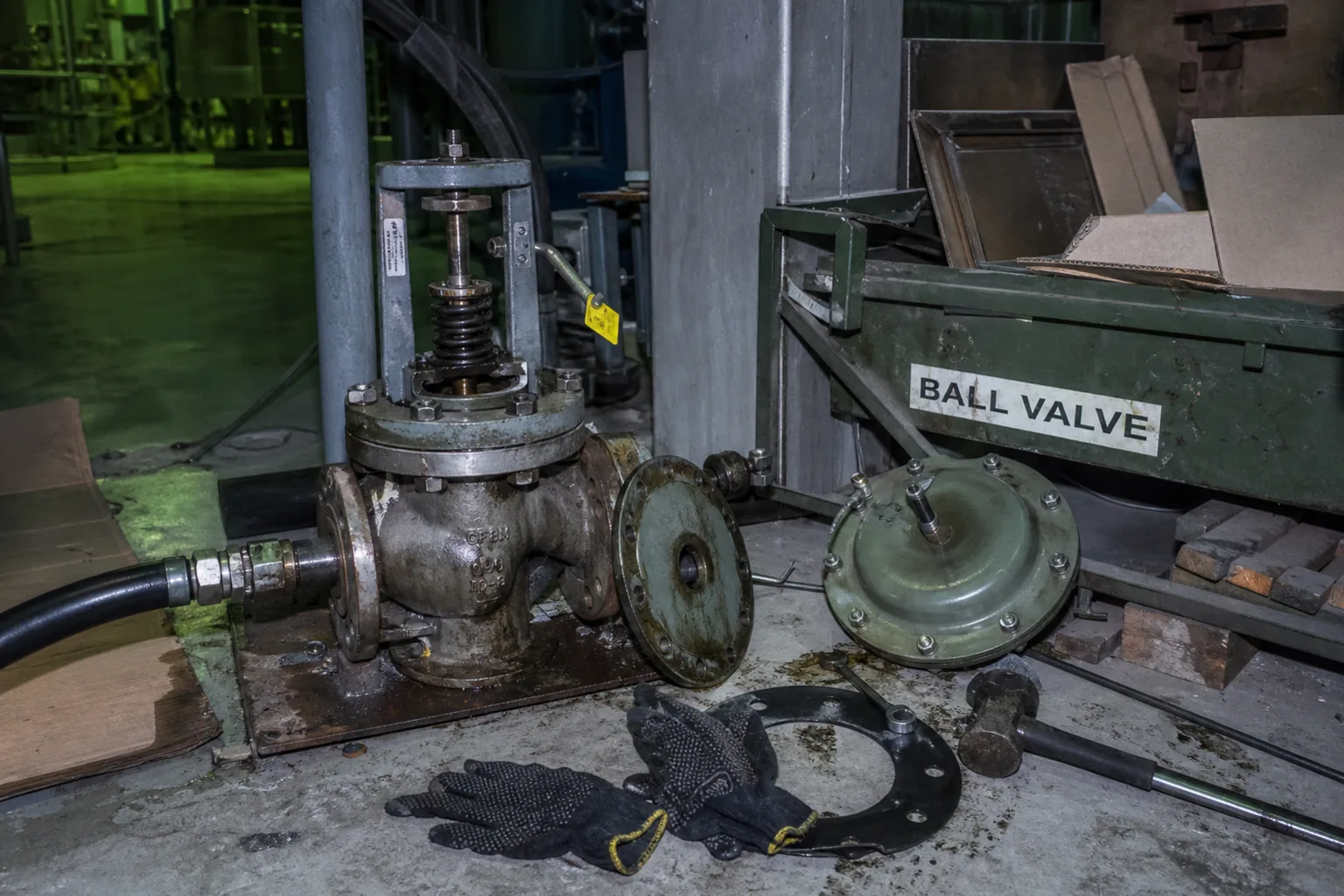
What to do when a catalogue or ERP class is being used to identify a technically specific spare
There is a familiar moment in a storeroom investigation.
The object in question has no useful label.
The machine is waiting.
And the ERP record appears to offer relief.
It says VALVE.
Sometimes it says an eight-digit code as well, which is VALVE with a tie on.
The material record is then treated as though it had identified a pressure boundary.
And a connection.
And a body material, a trim, an approval, a revision, an installed application.
It has not.
It has grouped a purchasing commodity.
The instinct is to use the class as the description.
A classification code can be genuinely valuable.
It groups spending.
It tidies a catalogue.
It supports search, exposes duplicate buying, and makes a report about valves look less like an archaeological dig.
None of that makes it a technical identity.
The component on the line still needs an issuer-qualified identifier, and evidence for the configuration that has to work there.
The useful question is not “What class does this spare belong to?”
It is “What controlled identity and evidenced attributes establish that this exact item can perform its required function in this asset?”
That is a longer question.
The machine remains unimpressed by brevity.
Exhibit A
The usual exhibit is a spreadsheet export with a class column that arrived before the rest of the record.
There may be an internal material number.
A supplier SKU.
A description reading BALL VALVE SS.
An eight-digit commodity code.
The record looks specific, because the screen has succeeded in occupying several columns.
It may nevertheless leave every fact that matters to the installed line unanswered.
Before anyone treats that row as a spare specification, capture what it actually says:
- manufacturer name and exact manufacturer part number, including prefixes, separators, suffixes, revision, series and traceability marking;
- internal identifier and declared issuer or namespace;
- classification scheme, code, level, release version, published title, source, assignment date and review status;
- the object classified: physical product, service, bundle, purchase line or establishment;
- technical properties with their identifiers, values, units, value status and provenance;
- asset location and installed use;
- lifecycle state, restrictions, approved relationships, and the evidence behind each one.
The source document, the release file and the label photograph are now accounting records.
Keep them.
Every controlled classification assignment needs eight fields before anyone starts describing a product.
Internal record identifier.
Scheme.
Version.
Selected class.
Level.
Source.
Assignment date.
Confidence or review status.
A code without that custody record is an assertion with a filing cabinet and no witness.
The class title is not enough either.
An eight-digit assignment can sit under the wrong four-digit grouping, when the assignment file and the hierarchy file come from different releases.
The title may have been corrected, translated or clarified since.
The code and the declared release are the controlled fact.
The pleasant words beside them exist to assist human beings, a role prose performs best when it is not asked to impersonate a database.
A purchasing category is not a technical definition
A commodity scheme answers a legitimate administrative question.
What is being bought?
One published hierarchy has five levels, and its eight-digit commodity code contains four successive two-digit pairs: segment, family, class, commodity.
A business-function level can qualify the commercial role without extending the code.
That is exactly enough structure to roll spending up and down a procurement tree.
It is not an engineering decomposition.
A bolt is grouped with purchasable fastening products.
It is not nested underneath every machine into which it disappears.
A valve is grouped as a commodity, not supplied with its design conditions merely because the category grew more specific.
This restraint is useful when the invoice is vague.
The analyst can keep the supported two-digit segment instead of inventing a final pair.
The parent is a true broader claim.
A guessed leaf is false precision, which is what happens when a categorization exercise puts on a hard hat and starts issuing replacement instructions.
So an eight-digit commodity code is not a pressure rating.
It is not a material certificate.
It is not a confirmation of end connection, seat material, flow direction, qualification, or compatibility with whatever the asset has been doing since the last turnaround.
It establishes the purchasing category and stops.
That is not a defect in the scheme.
That is the point of the scheme.
The financial file has two columns.
**Classified spend: useful.
Technically identified spare: still under investigation.**
The cost of confusing them is rarely booked in one place.
It appears as duplicate records.
Purchase history split across aliases.
A supposedly equivalent stock item.
An urgent order that cannot be received cleanly.
And a technician standing beside a line holding a part that is very convincingly a valve.
A dictionary is a second drawer
The more sophisticated schemes are where the misunderstanding becomes elegant.
One also uses an eight-digit classification code, in four two-digit levels: segment, main group, group, subgroup.
The fourth level is the specific product or service class.
Unlike a plain commodity tree, though, it can connect that class to properties, permissible values, units, keywords and application classes.
Excellent architecture.
Also an invitation to mistake the front door for the whole building.
A class can say that an item is a valve.
The associated dictionary can express a nominal diameter of 25 mm, a pressure rating of 16 bar, and a body material.
Those property statements are not hidden inside the class code, waiting for an energetic purchaser to decode them.
They are separate data records.
Each one needs a value and evidence.
That matters because a class is a vocabulary agreement.
It tells several suppliers which words and property identifiers can describe comparable equipment.
It does not declare every member of the class interchangeable.
Tolerances, interfaces, approvals, performance, configuration and restrictions stay obstinately attached to actual parts.
The same is true of a catalogue template.
A template may require selected properties, make a property multivalued, or narrow a permitted value list.
It does not turn the dictionary identifier into a manufacturer drawing.
It does not turn a product class into an approval record.
The template is a bilateral data specification.
The installed asset has not signed it.
The useful question is not “Does the candidate have the same class?”
It is “Do the controlled attributes, exact variant, asset restrictions and approved relationship support this direction of use?”
That final phrase matters.
A class relationship is symmetric only in the most unhelpful sense.
Both records occupy the same bucket.
A substitution relationship is directional, limited, approved or unapproved, and evidenced.
The two concepts should never share a field merely because an import mapping was feeling ambitious.
A value belongs to a variant
The attractive failure mode is the family page.
It lists 110 V and 230 V.
Someone assigns 230 V to every related record, because the value is in the catalogue and the record needs a value.
The system is now complete in the same way a crossword is complete when every square contains a letter.
A family page establishes that options exist.
It does not establish which option is the exact configured, orderable item.
Manufacturer declarations are primary evidence for product properties, when they identify that variant.
Approved test reports, certificates and controlled engineering data follow.
Distributor-enriched values can be useful, and they need a provenance flag, because they may have been copied from an earlier revision or inferred from the family.
For any property, retain the property identifier, the value, the unit identifier, the data type, the value status and the source.
0.75 kW is a technical statement.
0.75 is an orphaned decimal.
25 mm and 1 in require conversion rules before comparison.
25 °C and 25 K are not even close measurements, despite their admirably similar typography.
The null state needs the same discipline.
Not supplied, not applicable, unknown and to be confirmed are four different conditions.
Filling a required field with 0 mm, or with a free-text N/A, feels decisive.
It prevents machine validation, and quietly claims a value that was never established.
This is not pedantry about data quality.
A spare is selected for the function it must perform in an asset, under its actual interfaces, service, approvals and restrictions.
The classification tells the search where to begin.
The variant evidence tells the plant whether the search can end.
An industry code describes the shop
Industry classification causes a different category error, because its codes have the healthy appearance of official numbers.
They do not classify products.
They classify business establishments by production activity, normally a physical location or a distinct operating unit.
A site that manufactures castings and a site that retails the same castings are therefore unlike members of that scheme, while selling catalogue lines a buyer cannot tell apart.
The scheme has official levels from two digits to six.
Manufacturing occupies one range, retail trade another, transportation and warehousing a third.
Those are strong statements about economic activity.
They are remarkably weak statements about whether a particular valve has the required material, rating or approval.
An establishment record needs its own evidence packet.
Legal or trading name.
Location or establishment identifier.
Observation period.
Primary activity.
Activity evidence.
Agency or analyst source.
A broad company website may support a three-digit subsector and still fail to support a six-digit national industry assignment.
A directory code is even less suited to proving product capability.
The scheme also needs country and vintage, because national detail diverges below the shared level.
The code says something about how and where an establishment conducts its activity.
It says nothing about the particular thing that has arrived in Receiving with a label that needs reading.
The supplier classification belongs in the supplier file.
The product identity belongs in the material file.
And the plant should be spared the moment when a six-digit industry code is asked to seat a valve.
Do not build intelligent class fields
When records have been allowed to blur identity, classification and specification, the customary institutional response is to add a more elaborate field.
It starts as a sensible proposal.
Put the commodity code, the product class, the manufacturer number, the material, pressure and approval into one structured-looking string.
Give every segment a meaning.
Make the description field carry the exceptions.
Ask the next acquisition to conform.
Soon the class value is a miniature part number.
The part number is a miniature data sheet.
And a changed attribute requires either a new identifier, a false historical string, or a committee meeting about whether a dash may now mean something else.
That is how a material master stops being a record and becomes an estate.
Every entry retains an asset, and nobody is certain which fact has authority.
Stable identifiers should stay identifiers.
The issuer and namespace are what make their uniqueness meaningful.
A stripped separator must not automatically merge two identifiers until the manufacturer’s punctuation rule is known.
An internal number with eight characters can be valid in one plant and meaningless in another.
Search can normalize cautiously.
The approved displayed identity keeps its issuer and its spelling.
The classification assignment belongs beside that identifier, with scheme, code, level, release, source, date and status.
The technical attributes belong beside the assignment, with units and provenance.
Asset use, lifecycle status, restrictions and approved replacements belong in their own relationships.
A code can be searchable without being promoted to a specification.
The record design is not glamorous.
Which is why it works.
A record that can decline to guess
A sane master record answers separate questions without borrowing confidence from the adjacent column.
Who issued this identifier, and what is the complete approved number?
What object was classified, by which scheme, at which level, under which release, on what source?
Which attributes belong to this exact variant, with which units, status and provenance?
Where is it used, what restrictions apply, what lifecycle state is it in, and what evidence supports an approved relationship?
The receipt and the installed history then close the same loop.
Receiving verifies the manufacturer and the full part number.
Not merely sensor, filter or valve.
A changed manufacturer number, a missing suffix, an unexpected revision or an unrecognised supersession stays an exception.
It does not get washed through by the class code.
For identifier relationships, the minimum defensible row names both issuers, both identifiers, the relationship label and its date, with a scope beside them.
The source, the authority and the status decide whether a relationship is a historical alias, an issuer supersession, a catalogue suggestion, or an approved technical alternate.
Those are not decorative distinctions.
They stop a search result from silently becoming a repair decision.
The durable path is deliberately boring:
Observed label and installed context → controlled identity → versioned classification assignment → sourced attributes → approved relationship where one exists → acknowledged order → verified receipt → installed history.
That structure lets procurement report on valves.
It lets a catalogue exchange valve properties.
It lets maintenance find the right candidate.
And it lets engineering decide whether the candidate will work.
Each system gets to do its actual job, which is more than can be said for an eight-digit category code asked to substitute for a technical identity.
Closing the estate
A classification code is not worthless because it is incomplete.
It is valuable precisely when its scope is respected.
A commodity scheme classifies purchasing commodities.
A property dictionary supplies a class and a vocabulary.
An industry scheme classifies establishments.
None of them identifies an exact configured spare merely by being precise-looking, versioned, or eight digits long.
Keep the identifier stable and issuer-qualified.
Keep the class versioned and evidenced.
Keep properties structured, unit-bearing, and attached to the exact variant.
Keep substitution as a separate approved relationship.
Let search cross all of them, without letting one field impersonate the rest.
A category is a useful place to start looking.
It has never been the evidence that permits a plant to stop looking.
Asked on the floor
- Can an eight-digit UNSPSC code identify the valve needed for a repair?
- No. An eight-digit UNSPSC code identifies a purchasing commodity through segment, family, class, and commodity pairs. Its fifth business-function level can qualify the commercial role, but it does not state nominal diameter, pressure rating, body material, connection, trim, approval, or configured variant. The code supports spend aggregation and purchasing analysis; the controlled manufacturer identity and technical attributes identify the spare.
- What does an eCl@ss code add if it still does not identify the exact spare?
- An eCl@ss code places a product or service in an eight-digit, four-level class and connects that class to a technical property dictionary. The class makes a shared vocabulary available for similar products. The exact configured item still requires its property values, units, source, and status. A valve class can support fields for diameter, pressure rating, and body material without proving those values for one orderable valve.
- Why is a NAICS code useless for selecting a replacement part?
- NAICS classifies a business establishment by its production activity, not the products on its shelf. Its official hierarchy runs from a two-digit sector to a six-digit national industry. A manufacturer and a retailer can sell the same casting while belonging to different NAICS groups. The code can support economic or supplier analysis, but it supplies no evidence that a particular product is technically suitable.
- What has to be saved with a product classification code?
- A controlled classification assignment keeps an internal record identifier, scheme name, scheme version or vintage, selected code, hierarchy level, source reference, assignment date, and confidence or review status. The source can be a supplier catalogue, invoice, establishment description, regulator record, or analyst note. Without those fields, a code in a column cannot show what was classified, which release defined it, or why the assignment was accepted.
- Does the title beside a classification code settle what the code means?
- No. The published class title is a useful display value, but the controlled classification fact is the code together with its version or vintage. Titles can be corrected, translated, or clarified between releases. The parent path may also need retention when a reporting system cannot reliably rebuild it, because an eight-digit assignment can appear under a wrong four-digit grouping when hierarchy and assignment files come from different versions.
- Can a product family data sheet prove the voltage of the part in hand?
- No. A manufacturer declaration is primary evidence when it identifies the exact configured variant. A family page listing 110 V and 230 V establishes that options exist; it does not establish either value for one orderable item. Technical property records retain the property identifier, value, unit, data type, value status, and source so that an attribute can be traced to the actual product rather than inherited from a family.
- Why is a bare number in an attribute field a problem?
- A technical number requires its unit and provenance. A value of 0.75 kW is not the same record as a bare 0.75, and values such as 25 mm and 1 in require conversion rules before comparison. Unit type also matters: 25 °C and 25 K are not close measurements. Storing the value, unit identifier, data type, status, and source prevents a convenient column from becoming an unsafe instruction.
- Can two parts in the same eCl@ss class be approved substitutes?
- No. eCl@ss class membership means that products can be described with the same controlled vocabulary. Tolerances, interfaces, approvals, performance, configuration, and application restrictions still determine whether one actual product can replace another. An approved alternate is a separate, directional relationship with its own evidence, authority, source date, scope, and status. A class assignment does not create that relationship.
- What should happen when an automated import assigns a class to a spare?
- The imported assignment remains a candidate until the scheme release, code existence, hierarchy level, classified object, and source are recorded and reviewed. An eight-digit UNSPSC code needs the expected six-, four-, and two-digit ancestors in the declared release. An eCl@ss property needs to be permitted or meaningful for the selected class. Automation can assist classification, but it cannot approve a technical substitute from class membership.
- Why must a classification release version be stored?
- Classification meaning changes with the published release. UNSPSC is released as a versioned code set, and ECLASS publishes a new eCl@ss release each year; classes can move, split, or join even when the product has not changed. NAICS likewise needs a country and vintage. A release upgrade can require a human decision, particularly when a former class splits into several new classes.
- What records make a spare searchable without turning the description into a database?
- A usable material record keeps the manufacturer and internal identifiers, issuer, complete approved part number, versioned classification assignment, structured technical attributes with units and provenance, source and confidence record, asset use, restrictions, lifecycle status, and explicit relationship records. Search can then work across aliases, identity, class, and attributes while the authoritative display value remains intact. The description helps recognition; it does not carry the entire technical definition.